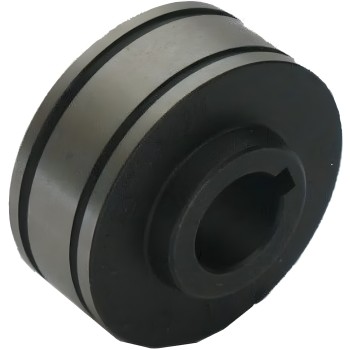
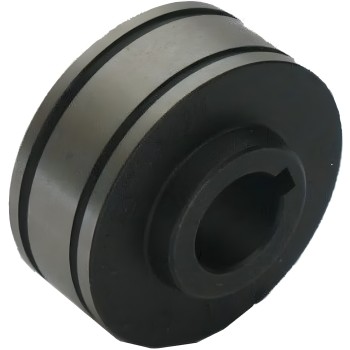
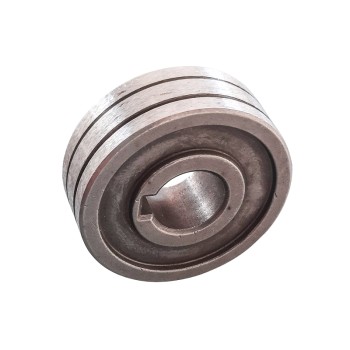
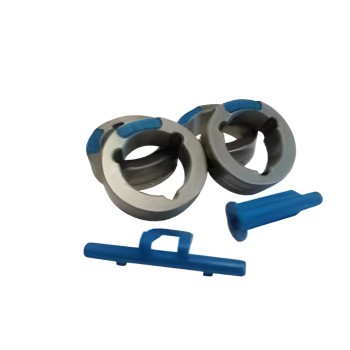
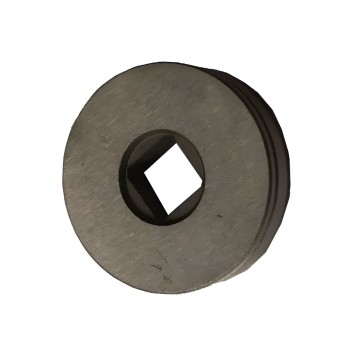
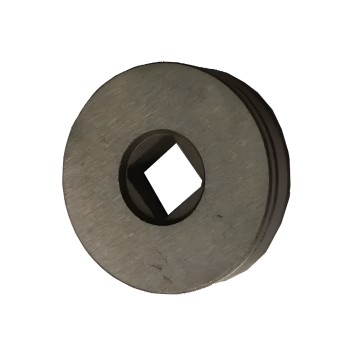
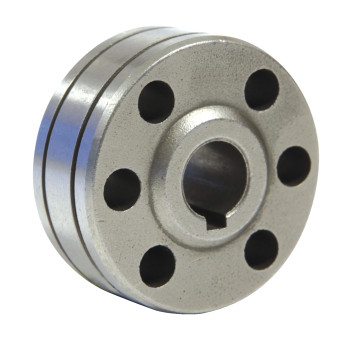
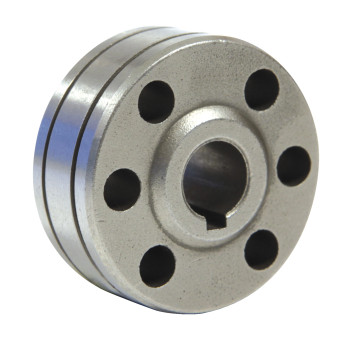
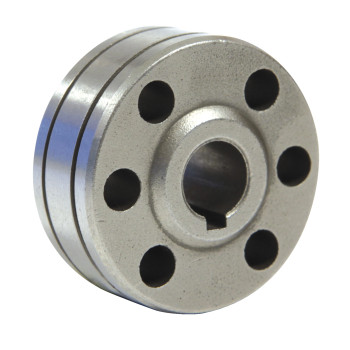
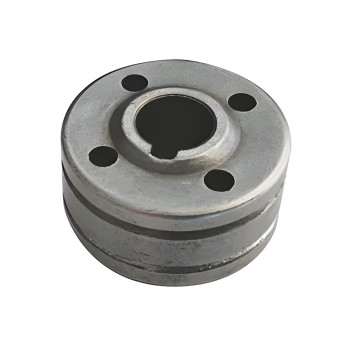
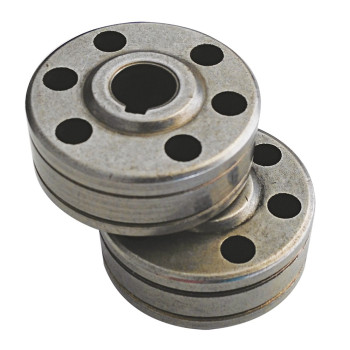
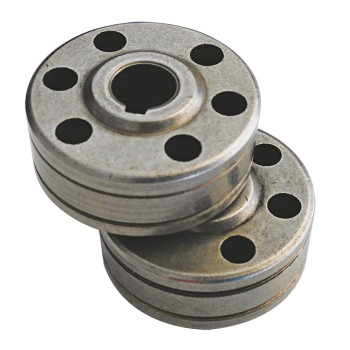
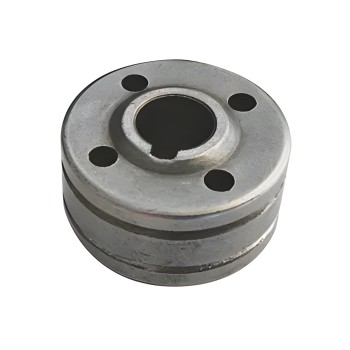
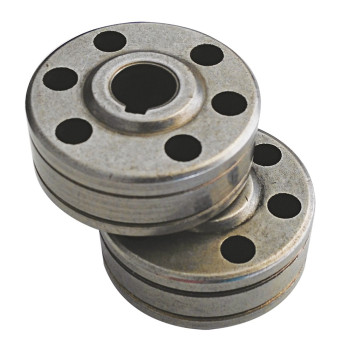
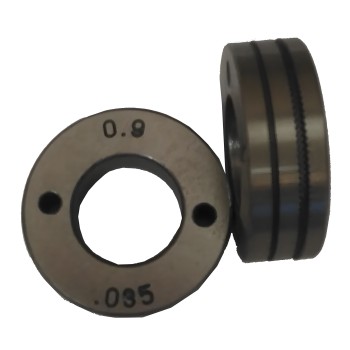
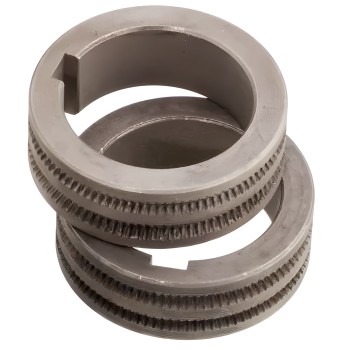
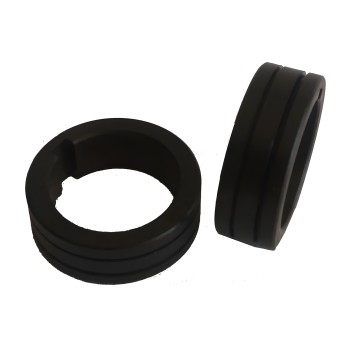
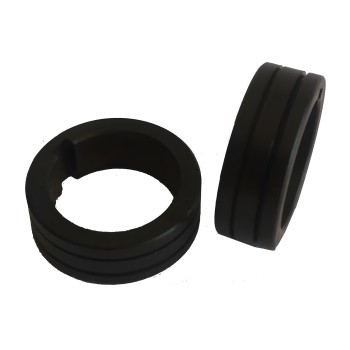
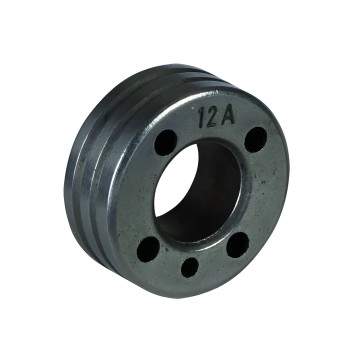
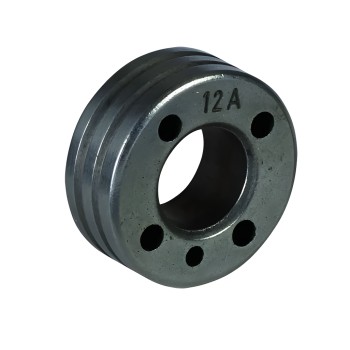
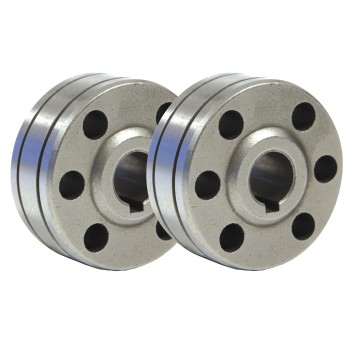
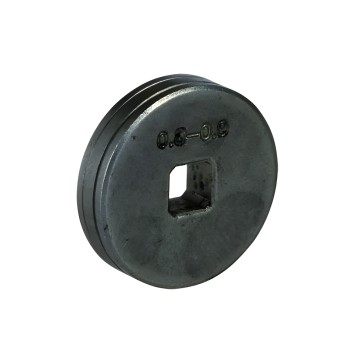
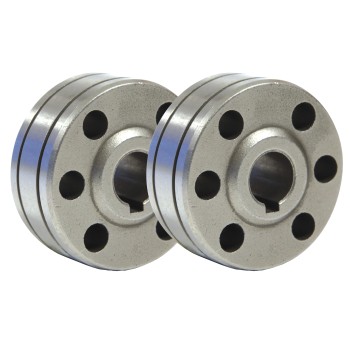
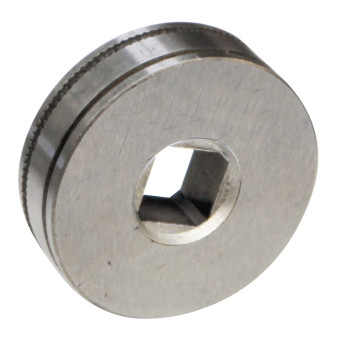
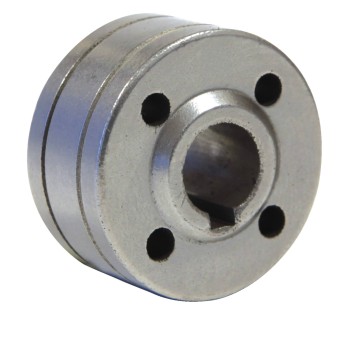
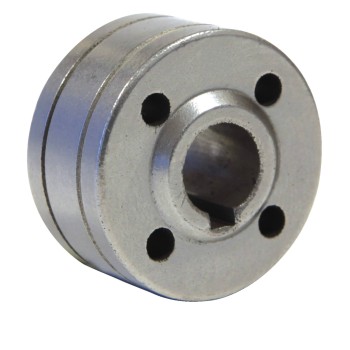
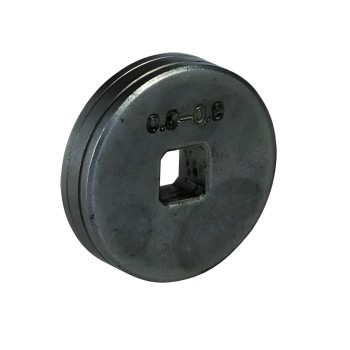
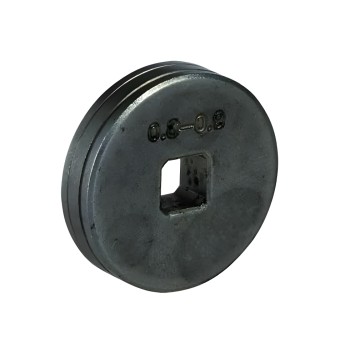
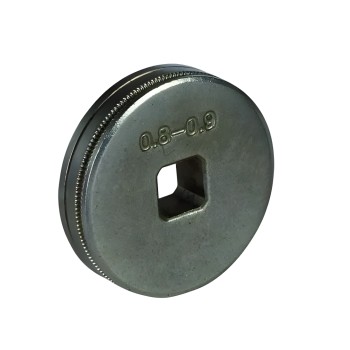
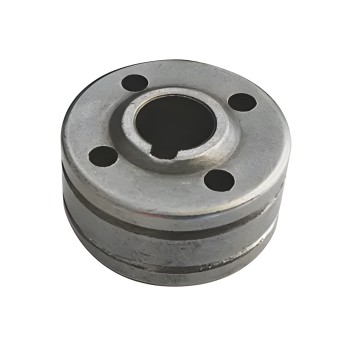
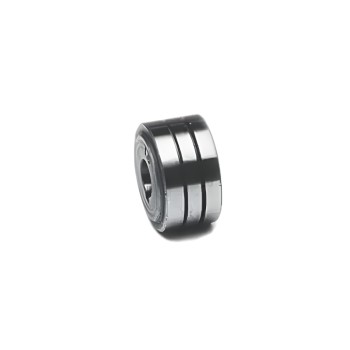
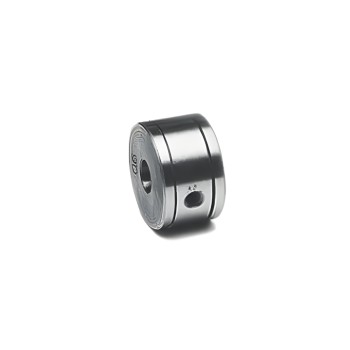
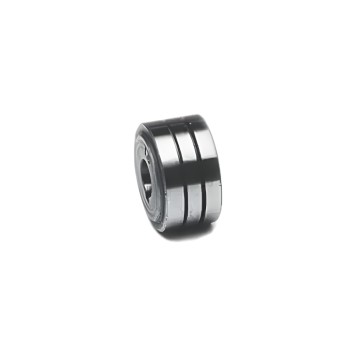
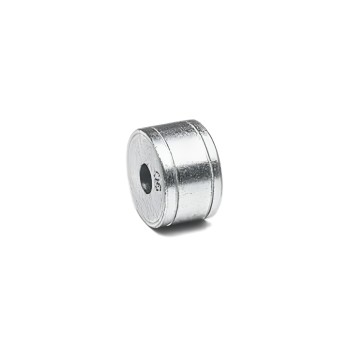
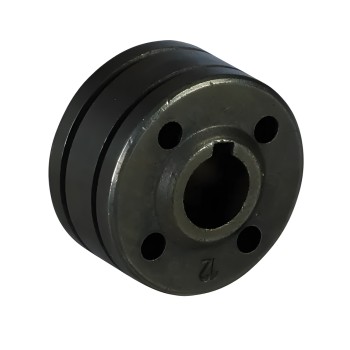
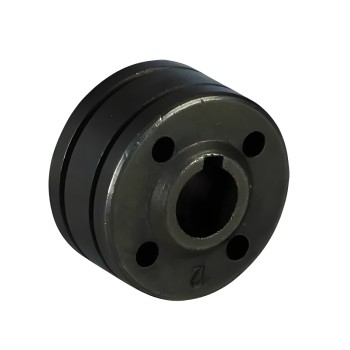
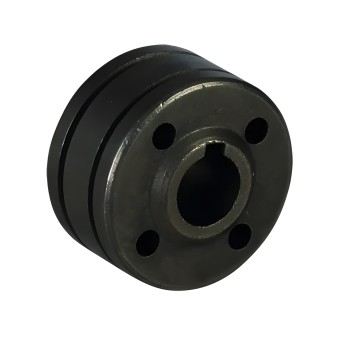
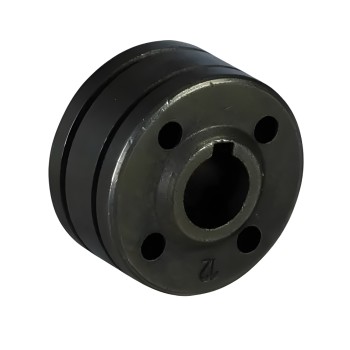
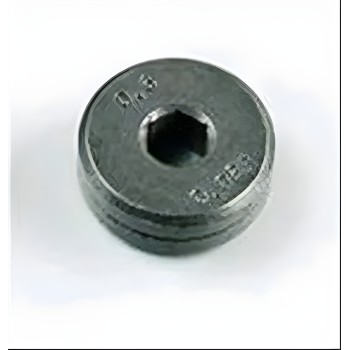
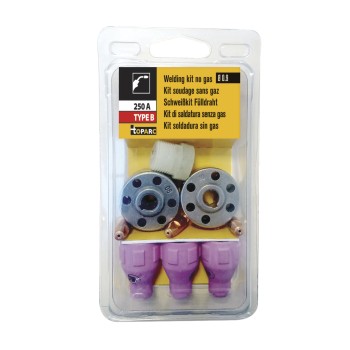
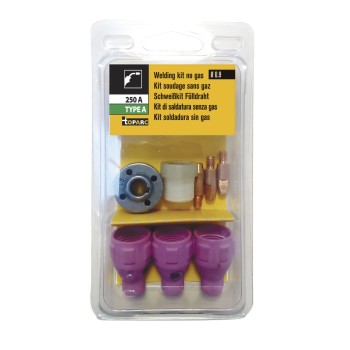
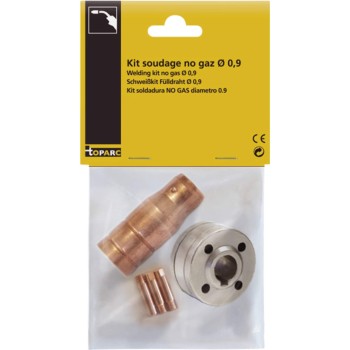
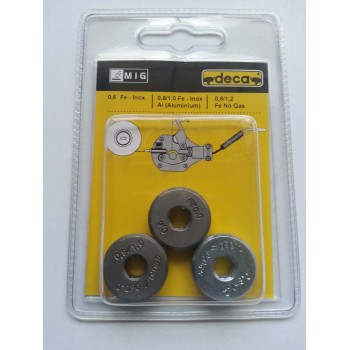
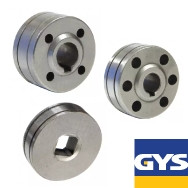
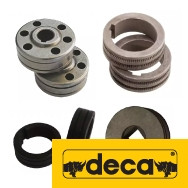
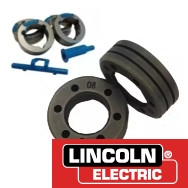
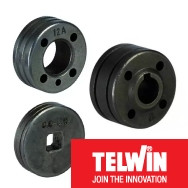
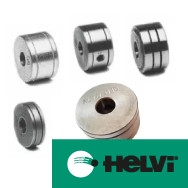
The drive roller is the wire feeder component that drives the wire from the spool to the torch. It is a key consumable of the semi-automatic welding machine: a suitable and well-maintained MIG roller ensures smooth wire feeding and a clean weld bead. Discover our selection of rollers for MIG-MAG welding machines.
The role of the drive roller in wire feeding
In a MIG-MAG machine, the MIG drive roller presses and drives the welding wire through the liner to the torch. The regularity of wire feeding directly determines arc stability and weld bead quality. A worn or unsuitable welding machine roller causes jerking, sticking, and irregular beads.
V-groove, U-groove, or knurled?
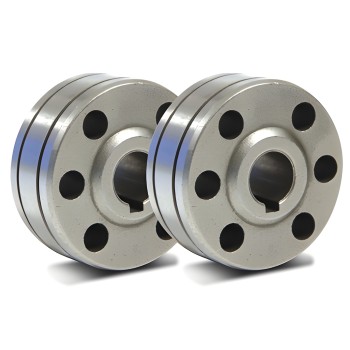
The profile of the drive roller is chosen according to the wire. The V-groove suits solid steel wire, the U-groove suits aluminum wire (softer, to avoid crushing), and the knurled groove suits flux-cored wire, whose surface requires more grip. A MIG roller with the wrong profile crushes or slips on the wire, which impairs feeding and welding quality.
The correct groove diameter
The groove diameter must exactly match the diameter of the wire being used. An oversized MIG drive roller lets the wire float; too tight, it crushes it. Always check compatibility between the wire diameter and the roller gauge. This simple detail prevents the majority of wire feeding problems.
Adjusting the feed pressure
Even with a good welding machine roller, the pressure roller must be correctly adjusted. Too much pressure crushes the wire and deforms its cross-section, causing jams in the liner; too little, the wire slips and does not advance smoothly. The correct setting is found by tightening progressively until smooth feeding is achieved, without slipping or visible crushing.
When to replace rollers?
A MIG roller wears over time: the groove deepens, the edges dull. Recurring jerking, marked wire, or irregular feeding despite correct adjustment signal that it is time to replace the rollers. It is an inexpensive MIG-MAG wear part whose replacement immediately restores feeding quality.
Rollers and wire types
The choice of drive roller is inseparable from the type of wire used. When switching from steel wire to flux-cored wire, it is often necessary to change the rollers and adjust the pressure. Similarly, aluminum wire requires specific U-groove rollers to avoid crushing this soft metal. Keeping a set of rollers suited to each wire avoids hasty handling and ensures optimal feeding with every consumable change.
Diagnosing a wire feeding problem
Jerking, marked wire, or an erratic arc are the classic signs of a worn or poorly adjusted MIG roller. Before blaming the power source, check the roller condition, the pressure setting, the contact tip, and the liner. In the majority of cases, the problem lies in the wire feeding circuit. A methodical diagnosis of these wear parts quickly resolves most weld bead defects in semi-automatic welding.
Rollers and overall wire feeder maintenance
The drive roller is part of an assembly: rollers, contact tip, liner, and torch. The wear of a single element degrades the entire circuit. When replacing rollers, take the opportunity to check the liner (blow it out with compressed air), the contact tip, and the nozzle. This grouped maintenance takes only a few minutes and preserves feeding quality for hundreds of meters of wire. A well-maintained wire feeder means a MIG machine operating at its full potential, bead after bead. Also remember to check the proper functioning of the spool brake, which contributes to correct wire tension and prevents tangles and overfeeding at start-up. A well-adjusted brake and rollers in good condition form the essential duo for smooth wire feeding.
For optimal operation, keep a spare set of drive rollers of each type and diameter you use: V-groove for steel, U-groove for aluminum, knurled for flux-cored wire. Their low cost makes it easy to keep spares on hand.
Our advice
For reliable wire feeding, choose a drive roller with the correct profile (V, U, or knurled) and the correct groove diameter for your wire. Adjust the pressure without excess and replace the rollers at the first signs of wear. Browse our selection of rollers for MIG-MAG machines.
Frequently asked questions
What type of roller to choose for a MIG machine?
Depending on the wire: V-groove for solid steel wire, U-groove for aluminum wire (softer, to avoid crushing), and knurled groove for flux-cored wire, which requires more grip. An unsuitable profile crushes or slips on the wire.
How to adjust the drive roller pressure?
By progressively tightening the pressure roller until smooth feeding is achieved, without slipping or visible crushing of the wire. Too much pressure deforms the wire and causes jams in the liner; too little, the wire slips and does not advance smoothly.
When should the rollers of a welding machine be replaced?
When recurring jerking, marked wire, or irregular feeding persist despite correct pressure adjustment. The groove wears over time: replacement immediately restores feeding quality. It is an inexpensive wear part.
Must the roller diameter match the wire?
Yes, exactly: the roller groove must match the diameter of the wire being used. A roller that is too wide lets the wire float; too tight, it crushes it. This compatibility is the first thing to check for correct wire feeding.


 Italy
Italy
 Germany
 Netherlands
 Ireland
 Portugal
 Norway
 Spain
Spain



 2-year warranty