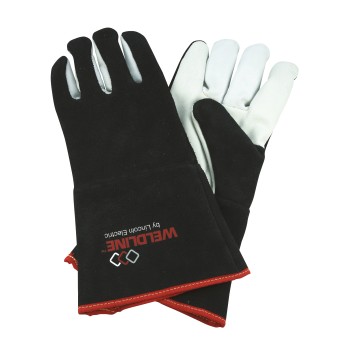
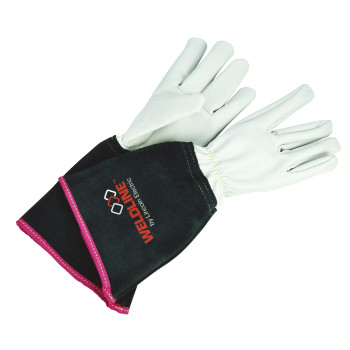
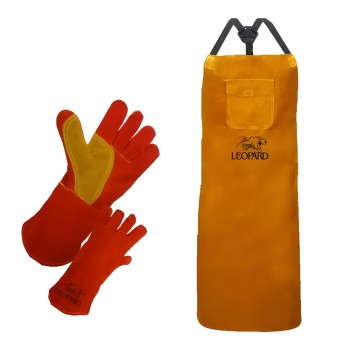
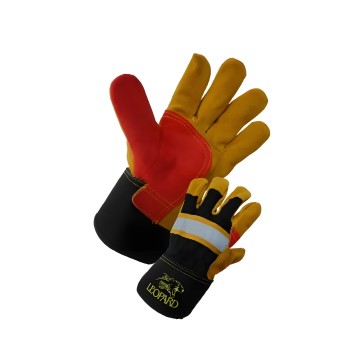
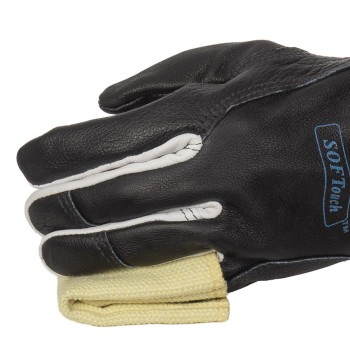
The welding glove is an essential piece of protective equipment: it protects the hands from heat, molten metal spatter, and arc radiation. Suited to each process, welder's gloves come in several materials and levels of dexterity. Discover our selection of gloves and sleeves for safe welding.
Why specific gloves?
Welding exposes the hands to high temperatures, sparks, and intense radiation. A welder's glove is designed to withstand these hazards, unlike an ordinary glove. Made from split or grain leather, it provides an essential thermal and mechanical barrier. Wearing appropriate welding gloves is not optional: it is a basic protection.
Match the glove to the process
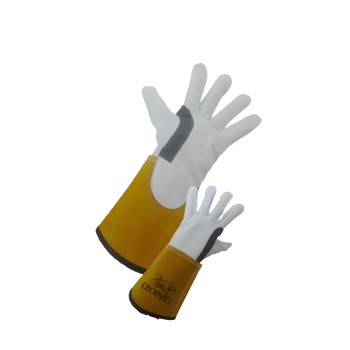
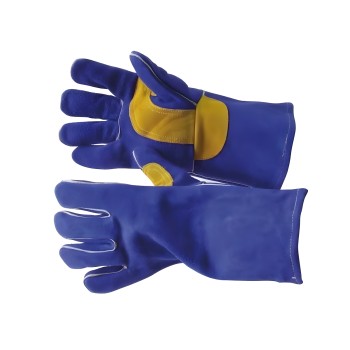
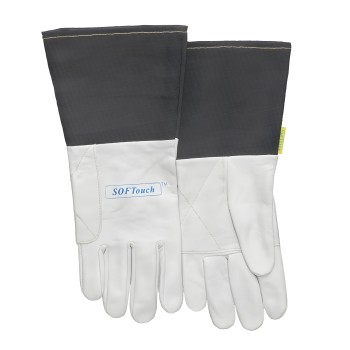
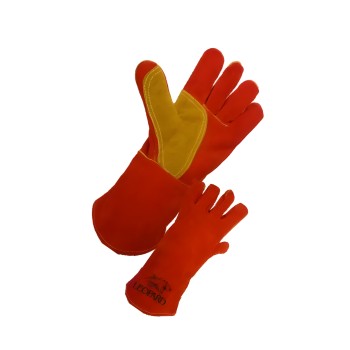
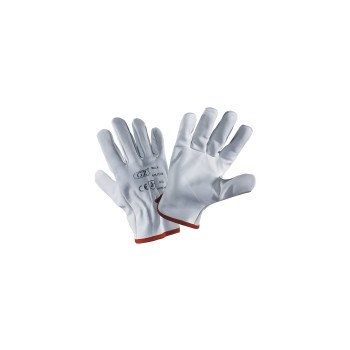
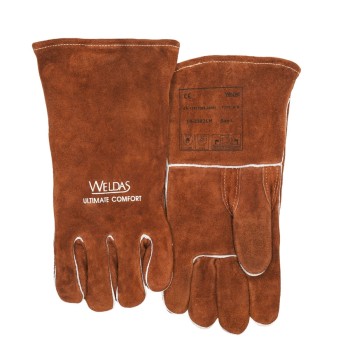
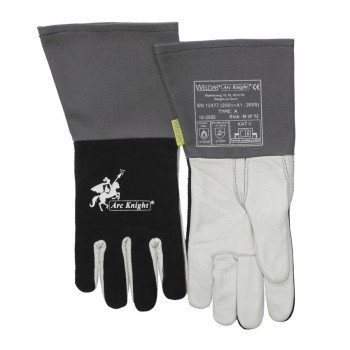
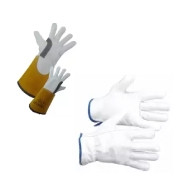
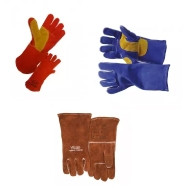
The choice of welding glove depends on the process. For MMA and MIG-MAG, with high heat and heavy spatter, thick split leather gloves are preferred for their robustness. For TIG, which requires precision, a thinner and more supple TIG welding glove in grain leather is chosen, preserving the dexterity needed to handle the filler metal.
Split leather or grain leather?
The material determines the balance between protection and flexibility. Split leather (the inner part of the hide) is thick and highly heat-resistant, ideal for MMA and MIG. Grain leather (the outer part) is thinner, more supple, and more precise, perfect for TIG. The choice depends on the desired trade-off between toughness and dexterity.
Sleeves and arm protection
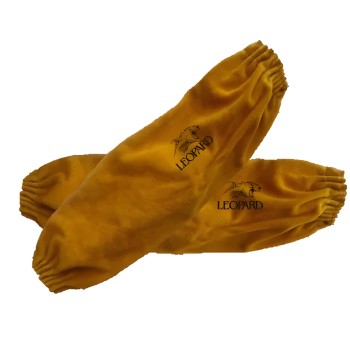
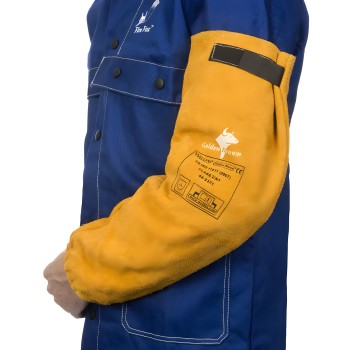
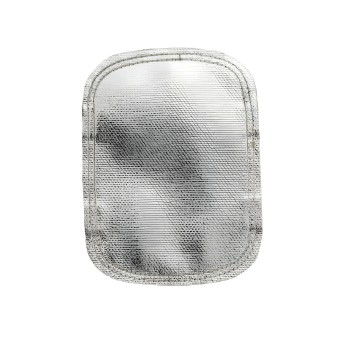
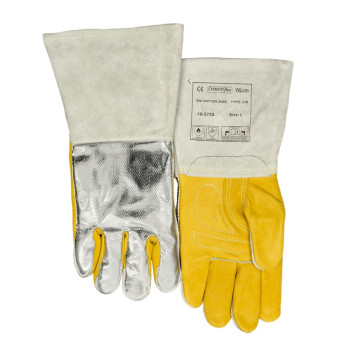
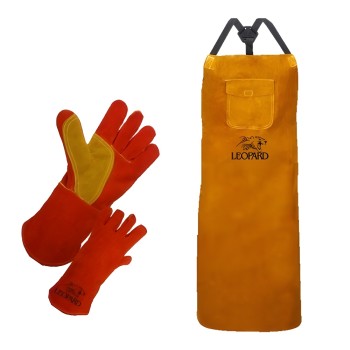
Beyond the hands, the forearm is exposed. A leather sleeve extends the protection of the glove and shields the arm from spatter and radiation. For intensive or positional work, it usefully completes the welding glove and is part of a complete set of equipment, alongside the other welder's protective gear.
Comfort and durability
A good welding glove must also be comfortable: resistant stitching (often Kevlar), a suitable lining, and good long-term durability. Quality gloves last longer and offer better protection. Check the stitching, often the weak point, and compliance with thermal and mechanical protection standards.
Glove care
To extend the life of your welder's gloves, store them in a dry place away from any heat source, and replace them as soon as the leather is punctured, hardened, or the stitching gives way. A damaged glove no longer fulfills its protective function: it is better to replace it without delay.
Protection standards
A good welding glove meets thermal and mechanical protection standards. These certify resistance to contact heat, molten metal spatter, and abrasion. Without going into technical detail, bear in mind that a glove certified for welding offers guarantees that an ordinary handling glove does not. Check that your welding gloves are designed for this purpose, and have not been repurposed from another application.
The role of stitching
The weak point of a welder's glove is often the stitching: that is where heat and flames can penetrate if the thread is not suitable. Quality gloves use heat-resistant stitching (Kevlar type) that does not melt under the effect of spatter. During use, monitor the condition of the stitching and the leather: a glove whose stitching gives way or whose leather is punctured no longer provides proper protection and must be replaced without delay.
One piece of equipment among others
The welder's glove is part of a set of protective equipment: it goes hand in hand with the welding helmet, flame-resistant clothing, and depending on the work, sleeves and respiratory protection. Protecting your hands without protecting your eyes or airways would make no sense. It is the coherence of the protective equipment that ensures the welder's safety.
Our advice
Choose your welding gloves according to the process: thick split leather for MMA and MIG, thinner grain leather for TIG. Add sleeves for intensive work. Opt for resistant stitching and replace your gloves as soon as they are damaged. Browse our selection of welder's gloves and sleeves.
Frequently asked questions
Which gloves to choose for welding?
Depending on the process: thick split leather gloves for MMA and MIG-MAG (high heat, spatter), and thinner grain leather gloves for TIG, which requires dexterity. They protect the hands from heat, spatter, and radiation.
What is the difference between split leather and grain leather?
Split leather is thick and highly heat-resistant, ideal for MMA and MIG. Grain leather is thinner, more supple, and more precise, perfect for TIG. The choice depends on the desired trade-off between toughness and dexterity.
Why thin gloves for TIG?
TIG welding requires handling the filler metal with precision, which demands dexterity. A thin grain leather glove preserves finger sensitivity while protecting against heat, unlike the thick gloves used for MMA or MIG.
What are welder's sleeves for?
They extend the protection of the glove and shield the forearm from spatter and arc radiation. Useful for intensive or positional work, they complement the glove for more complete protective equipment.
What is the price of a welding glove?
The price of a welding glove varies depending on the leather, the cuff, the lining, and the protection rating. For regular welding, opt for a certified glove that is heat-resistant and suited to the process.


 Italy
Italy
 Germany
 Netherlands
 Ireland
 Portugal
 Norway
 Spain
Spain



 2-year warranty