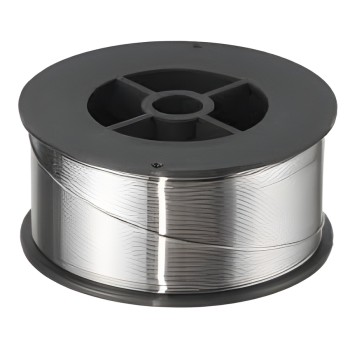
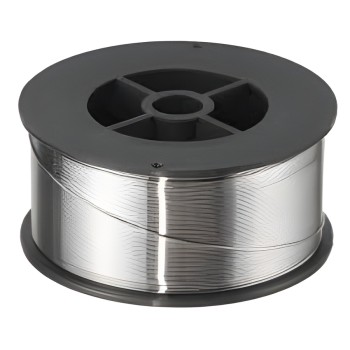
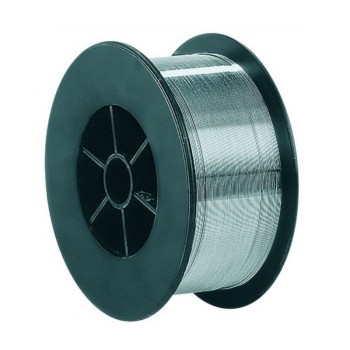
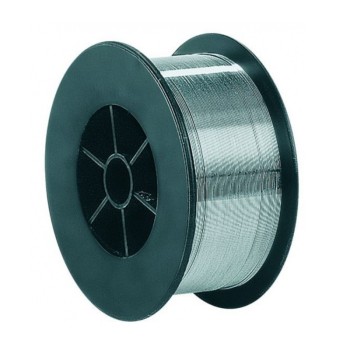
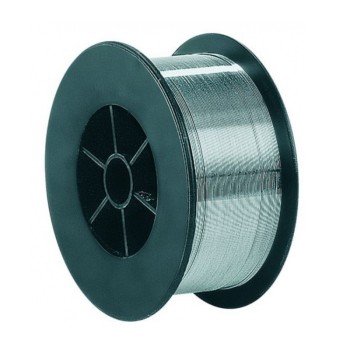
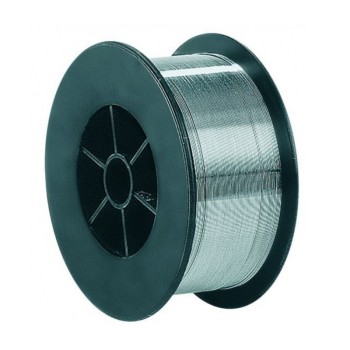
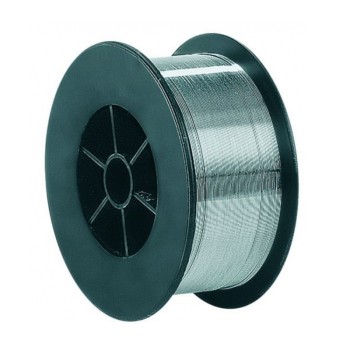
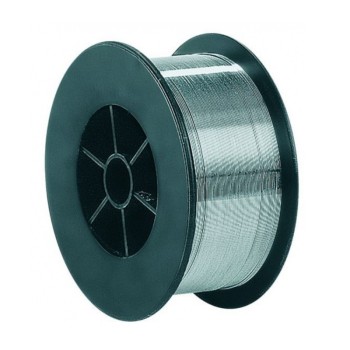
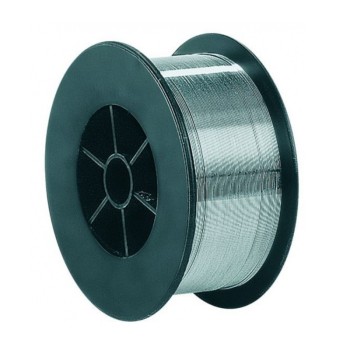
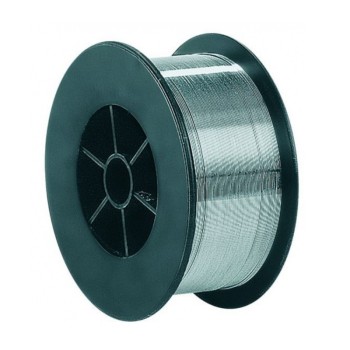
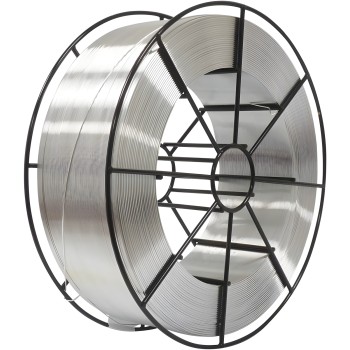
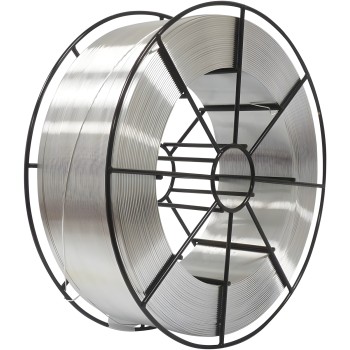
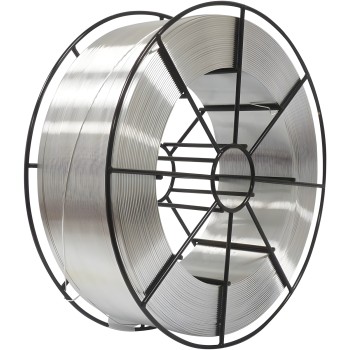
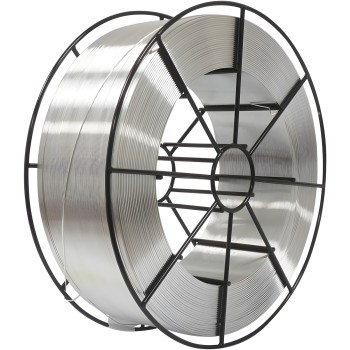
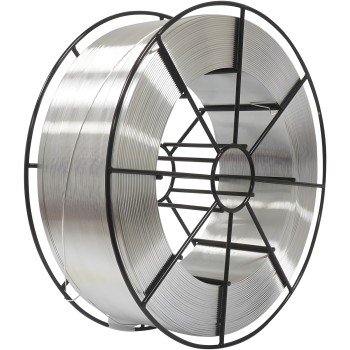
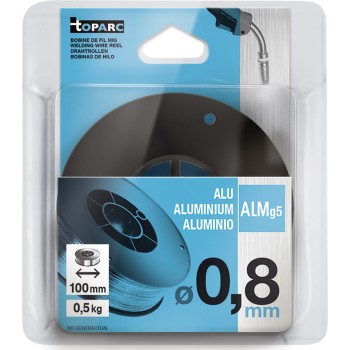
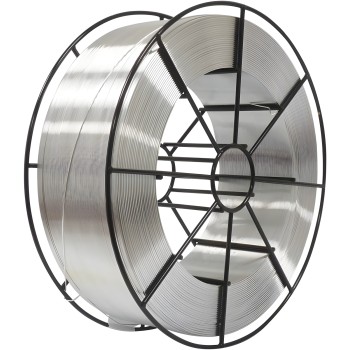
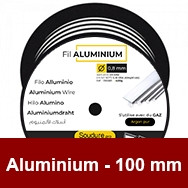
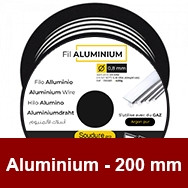
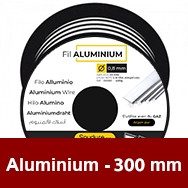
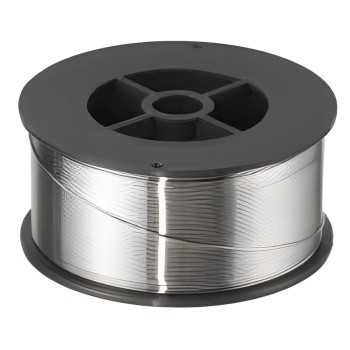
Aluminum welding wire is the essential consumable for MIG welding aluminum. More difficult to feed than steel wire, aluminum wire requires adapted equipment for a clean weld bead. Discover our selection of aluminum wire spools in common grades and diameters.
Why a specific wire?
Aluminum is a soft metal that oxidizes quickly. The aluminum welding wire must be of a grade compatible with the alloy being welded (usually 4043 or 5356), stored dry and handled with care. Its use in MIG requires pure argon as a shielding gas and a welding machine capable of handling this demanding metal.
Wire feeding for aluminum
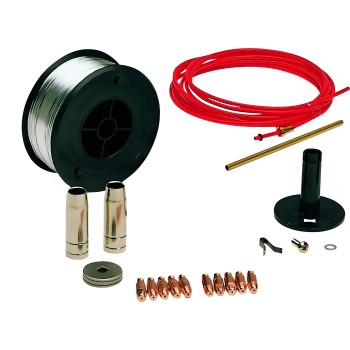
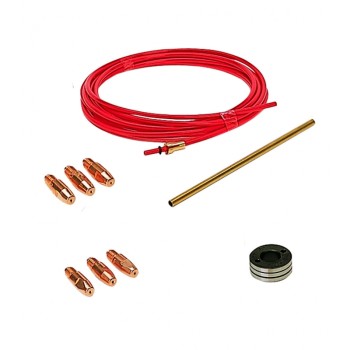
Aluminum wire is softer than steel wire: it deforms easily in the wire feeder. For smooth feeding, you need U-groove (round) drive rolls, a Teflon liner in the MIG torch and light drive pressure. These adaptations prevent crushing and jamming, which are common problems with aluminum.
Grade: 4043 or 5356?
The two most common grades of aluminum spool are 4043 (silicon-based, versatile and easy to weld) and 5356 (magnesium-based, greater mechanical strength). The choice depends on the base aluminum alloy and the part's requirements. When in doubt, 4043 is suitable for the majority of common applications.
Flux-cored aluminum wire: does it exist?
The term flux-cored aluminum wire is often searched for, but true gasless flux-cored aluminum wire remains extremely rare and limited. For MIG welding aluminum, solid wire with pure argon is used. Gasless MIG welding of aluminum is not feasible under good conditions; for quality work, gas is essential.
Spool storage
Aluminum wire oxidizes when exposed to moisture, which degrades the surface and creates porosity. Store spools in their packaging, in a dry place, and install them correctly on the wire feeder to avoid jams and tangles. A properly stored spool ensures clean wire and a sound weld bead.
Preparing your machine for aluminum
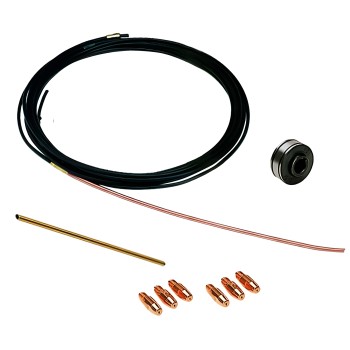
MIG welding aluminum is not something you can improvise. Beyond the aluminum welding wire, you need to adapt your machine: U-groove drive rolls, a Teflon liner (to replace the standard steel liner), an aluminum contact tip in the right diameter, and pure argon instead of the usual argon-CO₂ mix. This preparation ensures smooth wire feeding and proper gas shielding. With a properly configured machine, the aluminum spool feeds without stuttering and the bead is clean.
Storing and handling aluminum wire
Aluminum wire oxidizes easily: its surface becomes covered with an oxide layer that, in excess, degrades electrical contact and creates porosity. Keep spools in their packaging, dry and away from moisture. Handle the wire with clean hands and do not leave the spool exposed in the workshop any longer than necessary. These simple precautions preserve the quality of the consumable and the weld bead.
Settings and technique
MIG welding aluminum with aluminum welding wire requires specific settings: slightly higher voltage, fast wire speed, and a well-adjusted burn-back time to prevent the wire from sticking in the contact tip. Always test on scrap pieces before tackling the actual workpiece. Aluminum conducts heat quickly, which makes starts tricky: a push or pull technique, depending on position, helps stabilize the weld pool.
Alternative: TIG welding for aluminum
If finish takes priority over productivity, TIG welding with an AC/DC machine and filler rods remains the benchmark for aluminum. MIG welding with an aluminum spool favors speed and thicker materials. The two processes are complementary: MIG for productivity, TIG for precision, aesthetics and fine finishing on thin aluminum sheets.
Finally, for quality aluminum projects, preparation and metal cleanliness matter as much as wire selection. Remove oxide just before welding using a stainless steel brush dedicated to aluminum for the best results.
Our advice
For MIG welding aluminum, choose an aluminum welding wire of the appropriate grade (4043 or 5356), equip your machine with U-groove drive rolls and a Teflon liner, and use pure argon. Keep the spool dry. Browse our selection of aluminum wires and spools.
Frequently asked questions
Which wire should you choose for MIG welding aluminum?
A solid aluminum wire of the appropriate grade: 4043 (versatile, silicon-based) or 5356 (stronger, magnesium-based) depending on the base alloy. The wire is used with pure argon as a shielding gas and a machine suited for MIG aluminum welding.
Do you need special drive rolls for aluminum wire?
Yes: U-groove (round) drive rolls are needed to avoid crushing the wire, which is softer than steel. A Teflon liner in the torch and light drive pressure are also required. These adaptations prevent crushing and wire jams.
Is there gasless flux-cored aluminum wire?
True gasless flux-cored aluminum wire is extremely rare and limited. To MIG weld aluminum under good conditions, solid wire with pure argon is used. The gas is essential for quality work on aluminum.
What is the difference between 4043 and 5356 aluminum wire?
4043 contains silicon: versatile and easier to weld. 5356 contains magnesium: better mechanical strength. The choice depends on the aluminum alloy being welded and the part's requirements. When in doubt, 4043 is suitable for most applications.


 Italy
Italy
 Germany
 Netherlands
 Croatia
 Denmark
 Finland
 Greece
 Portugal
 Sweden
 Norway
 Bulgaria
 Estonia
 Latvia
 Lithuania
 Poland
 Czech Republic
 Romania
 Slovakia
 Slovenia
 Hungary
 Spain
Spain



 2-year warranty