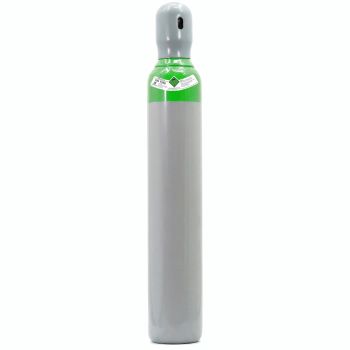
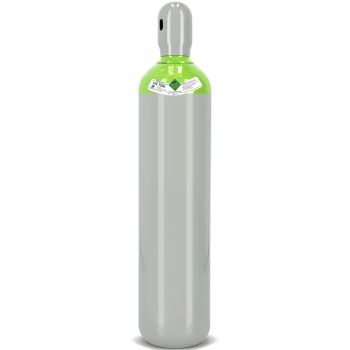
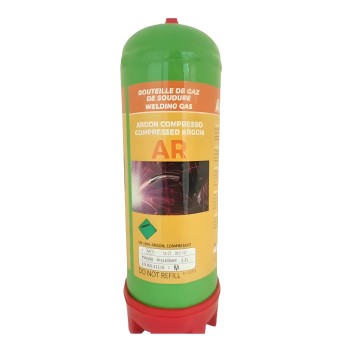
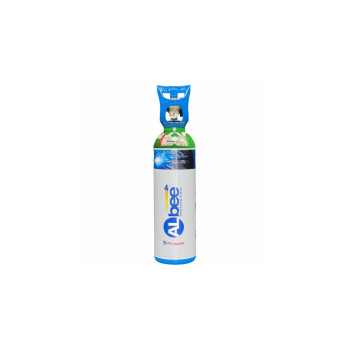
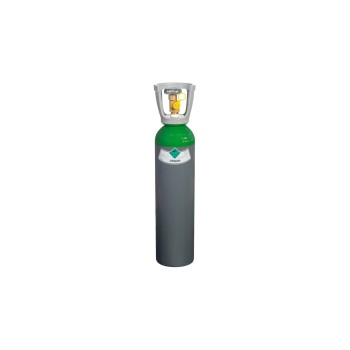
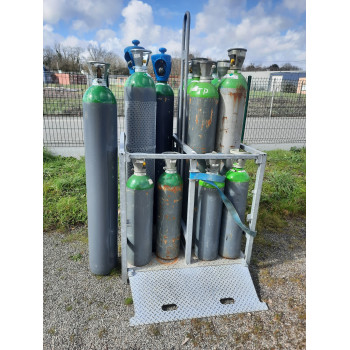
The argon cylinder is the essential shielding gas for TIG welding. Pure argon isolates the weld pool and tungsten electrode from the surrounding air, guaranteeing a stable arc and a perfectly clean weld bead. Discover our selection of argon gas cylinders for TIG welding, along with our advice on choosing and using them correctly.
Why use argon in TIG welding?
The TIG process demands flawless gas shielding. Argon is an inert gas: it does not react with the molten metal, making it the ideal TIG gas. It protects the tungsten electrode, stabilises the arc and prevents any oxidation of the weld pool. This is why argon welding is synonymous with a clean finish and consistent weld beads, free of spatter and porosity. Without this shielding, TIG welding is simply impossible.
Pure argon or mixtures?
For most TIG work on steel, stainless steel, and aluminium, pure argon is the benchmark. It is suitable for virtually all applications and remains the most versatile choice. For certain specific productions (thick stainless steel, increased productivity), argon-hydrogen or argon-helium mixtures exist, but they remain reserved for advanced industrial applications. For the home user and the craftsman, the pure argon cylinder covers all common needs.
TIG and MIG: don't mix up the gases
Be careful not to confuse gases by process. TIG operates with pure argon, while MIG/MAG welding of steel uses argon-CO₂ mixtures. Using the wrong gas degrades weld bead quality. For MIG on steel, visit our range of MIG/MAG gas cylinders; for TIG, stick with argon.
Which cylinder size should you choose?
Argon TIG cylinders come in several capacities. A small cylinder suits occasional use and is easy to store; a large capacity is essential for a workshop that welds regularly, to space out refills. As TIG consumes gas continuously during the arc, plan your consumption in advance. To avoid the constraints of long-term rental, our refillable cylinders with no contract offer a flexible alternative.
Regulator and flow rate
An argon gas cylinder is used with a flow regulator that controls pressure and sets the flow rate. In TIG, this flow rate is critical: too low, it allows air to contaminate the weld pool; too high, it creates turbulence. The typical setting is between 6 and 12 l/min depending on the nozzle diameter and the workpiece. A well-adjusted flow rate is the key to a sound TIG weld bead.
Safety and storage
Pressurised gas requires strict rules. Store the argon cylinder upright, secured, in a ventilated area away from any heat source. Close the valve after use and before any movement, and secure the cylinder on a trolley for safe transport. Check the fittings for leaks using soapy water. These precautions apply to any compressed gas cylinder.
Completing your TIG setup
Argon is just one component of the TIG setup. Pair it with a suitable tungsten electrode, the filler metal matching your base metal, and a quality TIG torch. The complete setup, properly adjusted, guarantees the clean finish characteristic of the process.
Consumption and autonomy
Argon flows continuously throughout the arc during TIG welding, making consumption constant. To estimate the autonomy of an argon TIG cylinder, multiply the set flow rate (usually 6 to 12 l/min) by your effective arc time. Excessive flow wastes gas without improving shielding; insufficient flow compromises the weld bead. Proper adjustment of the flow regulator therefore optimises both quality and cost. Also consider post-flow: a slight flow maintained after the arc is extinguished protects the weld pool and electrode during cooling. To space out refills, choose a capacity suited to your working pace, and monitor the residual pressure to anticipate replacement before running dry mid-weld.
Our advice
For TIG welding, pure argon is the safe and versatile choice, whatever metal you are working with. Choose a capacity suited to your frequency of use, equip yourself with a reliable flow regulator, and carefully adjust the flow rate. For greater flexibility, opt for a refillable cylinder with no contract. Browse our selection of argon cylinders and ensure your TIG welds have flawless shielding.
Frequently asked questions
Which gas should you use for TIG welding?
Pure argon. It is an inert gas that protects the tungsten electrode and the weld pool from oxidation, ensuring a stable arc and a clean weld bead. It is suitable for virtually all TIG work on steel, stainless steel, and aluminium.
Is pure argon required for TIG welding?
For the vast majority of TIG work, yes: pure argon is the benchmark and covers steel, stainless steel, and aluminium. Mixtures (argon-hydrogen, argon-helium) exist for specific industrial applications, but they remain reserved for advanced uses. For the craftsman and the home user, pure argon is sufficient.
What flow rate should you set for argon in TIG welding?
The typical setting is between 6 and 12 l/min depending on the nozzle diameter and the workpiece. A flow rate that is too low allows air to contaminate the weld pool; one that is too high creates turbulence. A slight post-flow after the arc is extinguished protects the weld pool and electrode during cooling.
Can TIG argon gas be used for MIG welding?
It is not recommended for steel. TIG operates with pure argon, while MIG-MAG for steel uses an argon-CO₂ mixture. Welding steel with MIG using pure argon degrades arc stability and weld bead quality. Each process has its own gas.


 Italy
Italy
 Germany
 Netherlands
 Denmark
 Portugal
 Norway
 Spain
Spain



 2-year warranty