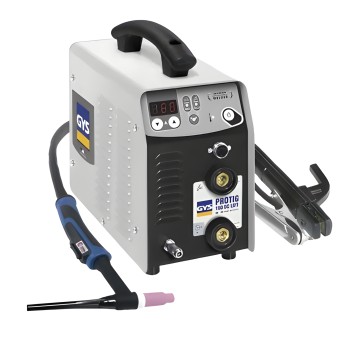
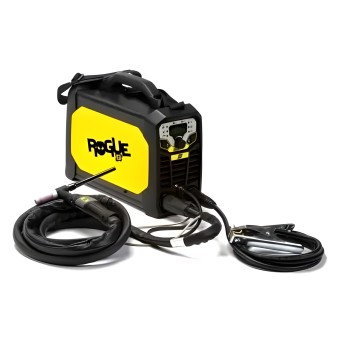
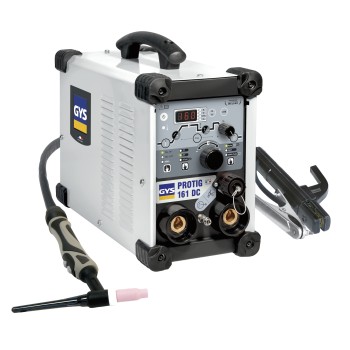
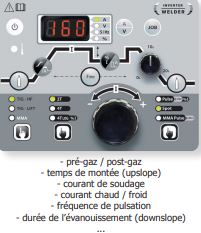
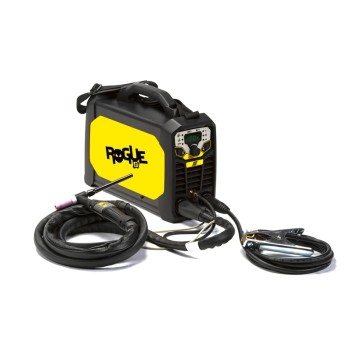
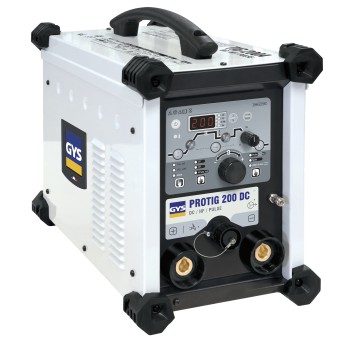
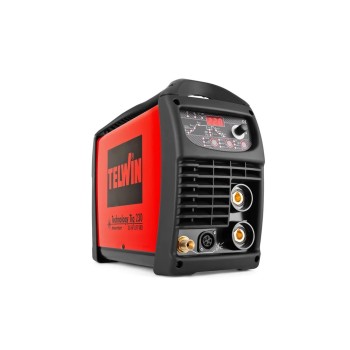
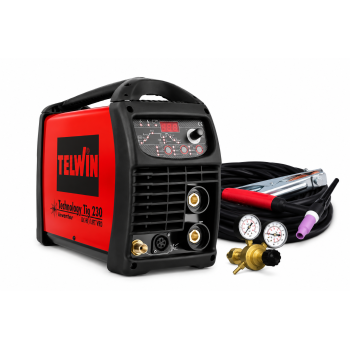
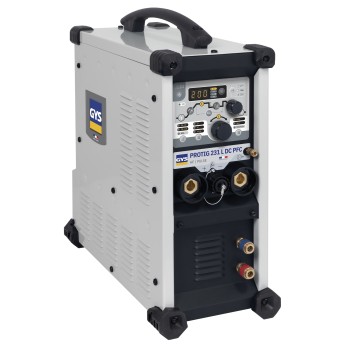
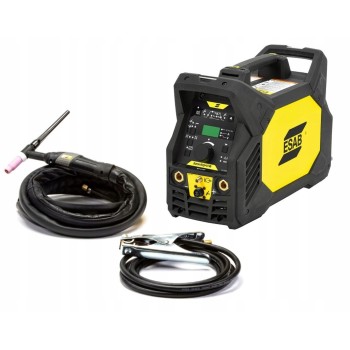
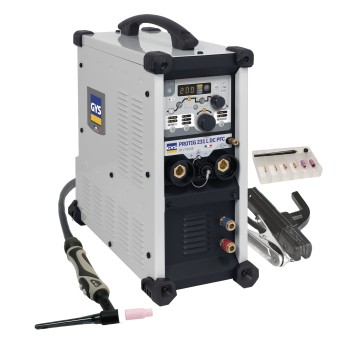
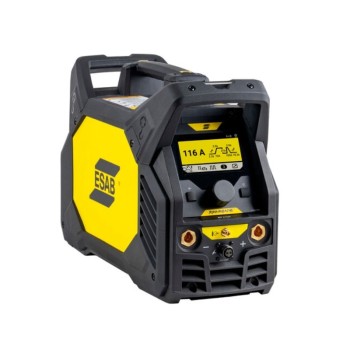
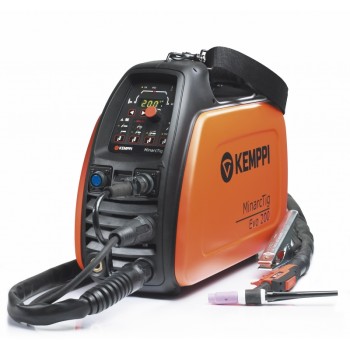
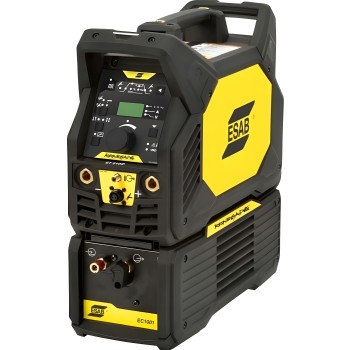
TIG welding machines are generally known for their ability to weld different types of metals such as steel, aluminium and stainless steel, and operate with both types of current (alternating and direct). However, it is possible to obtain TIG welding machines adapted for a specific use, as is the case with those welding exclusively steel and stainless steel and operating only on direct current, such as the Siltig 415. The principle is the same. A filler metal is placed in the weld pool until it melts in order to bond the metal pieces to be welded. To do this, the welding machine must conduct the current until an electric arc appears. Although the DC TIG steel and stainless steel model only allows the welding of these two metals, the quality of the finish is not reduced as a result. We will tell you more in the rest of this article.
Understanding DC (direct current) power supply
This concept can be understood in terms of polarity.
In straight polarity
At this level, the two poles are connected to the two main elements. The anode (the positive pole) is connected to the workpiece while the cathode (the negative pole) is connected to the tungsten electrode. Then, the electrons released by the cathode move towards a concentrated area of the anode in order to obtain a fairly narrow and sufficiently penetrated weld bead. This is the process applied to all metals that need to be TIG welded, with the exception of aluminium and its light alloys. Under this polarity, the oxide layer present on aluminium is not removed.
In reverse polarity
Just like the previous polarity, reverse polarity is also obtained by convention. Thus, the positive pole is connected to the refractory electrode, which then becomes the anode. An intensive bombardment of electrons from a relatively large section of the base metal then concentrates on the tip of the anode. With this polarity, the weld bead obtained has low penetration, moderate spread and makes the electrode prone to easy deterioration after excessive heating.
Although its stripping action is quite vigorous, especially with regard to aluminium and its alloys, this polarity is no longer used, particularly because of the damage it causes, notably to the tungsten electrode.
What is a welding machine?
A welding machine is a device acting as a powerful transformer equipped with a ventilation system, used to facilitate the welding of different metals. For most welding machines, they serve to convert 220 V alternating current into direct current with an amperage determined according to the intensity required for a weld. Furthermore, depending on the type of metal to be welded, it is possible to vary the amperage simply by using a knob called a potentiometer.
The different types of welding possible with TIG
This process offers several welding modes.
Fillet welding
The fillet welding technique consists of two metals joined at a right angle. You then need to tilt the torch at a 45-degree angle to obtain a weld pool. Then choose a short arc by pushing the electrode past the ceramic cone. Finally, simply position the tungsten electrode at the intersection of the metals and carry out the welding.
"Butt" welding on sheet metal or tube
This type of welding requires a minimum of dexterity to prevent the metals from overlapping. Care must then be taken to gradually reduce the amperage at the end of the weld in order to avoid the formation of craters.
Lap joint welding
This welding technique consists of creating a weld pool between the edge of a metal piece overlapping the surface of another piece. As soon as the two elements fuse, the filler metal must be introduced as fill within the weld pool.
The advantages of TIG welding
TIG welding has the particularity of being easy to use, especially for work requiring a minimum of dexterity. It can serve equally well for on-site repairs and production assembly. The main element that has allowed TIG welding to build such a solid reputation for reliability of the work obtained and the quality of the finish. The TIG process has many other advantages, a comprehensive list of which is provided below:
- It allows welding to be carried out with or without filler metal, depending on the final application.
- It is extremely malleable, stable, can be used in any position and is easily automated.
- TIG welding produces very little smoke or weld spatter.
- The TIG process allows all types of metals to be welded and is used even in cases of dissimilar welding, particularly with stainless steel, aluminium, copper, magnesium, titanium, etc.
- TIG welding produces very high-quality welds with very few visible defects.
How to set up the DC TIG Steel-Stainless steel welding machine?
Before operating your stainless steel machine or steel machine, it is important to have all the various protections in place (gloves, goggles, helmet, etc.). To begin, you will need to connect the TIG torch. This involves connecting the torch to the front of your welding machine using an adapter. Most torches have a ceramic nozzle to control the argon, a collet to hold the electrode and potentially a cooling system.
Next, you will need to select the polarity. The DC (direct current) setting is the one recommended for welding steel or stainless steel. If you have a 2-in-1 welding machine, you will need to switch to direct current for welding. However, welding exclusively steel and stainless steel is simplified when you have a dedicated machine such as the Siltig 415. The next step is to sharpen the tungsten refractory electrodes so that the striations run towards the axis of said electrode. However, do not sharpen them in concentric circles perpendicular to the axis of the refractory electrode. We recommend, in order to successfully sharpen your electrode, that you refer to a bench grinder or a machine designed for tungsten electrodes.
After sharpening comes the phase of adjusting the gas flow rate. TIG welding processes are renowned for using only inert gases. The most common is argon, used as-is or, if desired, combined with helium. While the gas flow rate depends heavily on the welding project to be carried out, it can nevertheless be adjusted using a pressure gauge. Generally, an average flow rate of between 4 and 12 litres per minute is observed. Finally, open the gas and adjust its intensity according to the thickness of the metal.
How to use it to weld a workpiece?
In practice, to weld a piece on a stainless steel machine, for example, a number of precautions must be taken:
- Clean the workpiece: before welding, it is essential to ensure that the surface of the workpiece is clean. You can, for example, use a grinder to make carbon steel shiny. On stainless steel, a cloth soaked in solvent will do the job.
- Prepare the workpiece: at this stage, you need to join, position and hold the pieces to be welded. To do so, use a square, a locking plier and/or clamps to hold the elements to be welded together. Make sure the connection between the ground clamp and the workpiece is active.
- Tack the pieces: to do this, you need to tack them with a few tack welds. These are simply small marks whose purpose is to keep the pieces stable until the final weld is made. Make sure they are solid and space them at regular intervals.
- The TIG torch in one hand: for your TIG torch, you will need to angle it at approximately 75° with the tungsten electrode. Make sure that the latter does not come into direct contact with the workpiece, at the risk of having to re-sharpen the electrode.
- The filler metal in the other hand: regarding the filler metal, it should be angled at approximately 15° relative to the workpiece.
Choose a base metal and then use the electric arc to melt it. The power of the arc will create a pool of molten metal that will serve to fuse the two pieces of metal to be joined. After the weld pool forms on the two metal pieces, bring your filler metal close to the liquid metal pool with a quick touch so that there is no sticking. The filler rod reinforces the welded pieces by adding thickness.
Then use your arc to move the weld pool in the desired direction. Unlike MIG welding where you push the torch, in TIG welding you pull it. Finally, we recommend paying close attention to the hand holding the filler rod.
Frequently asked questions
Which welding machine for stainless steel?
For stainless steel, a DC TIG machine offers the best finish. Stainless MIG-MAG or MMA with stainless steel electrodes are also suitable depending on thickness, productivity and the expected result.
What type of welding for stainless steel?
Stainless steel is welded primarily by TIG, stainless MIG-MAG or MMA with stainless steel electrodes. TIG is preferred for clean and precise welds.
What is the price of a TIG stainless steel welding machine?
The price of a DC TIG welding machine - Steel - Stainless steel depends mainly on the power, duty cycle, brand and included features. Also compare the accessories supplied, as they significantly change the actual cost of use.


 Italy
Italy
 Germany
 Netherlands
 Denmark
 Portugal
 Norway
 Spain
Spain



 2-year warranty